

How Robotics Could Transform the Future of British Architecture and Construction
British Architecture and the way we design buildings have changed dramatically over the past few decades. From advanced BIM software and 3D modelling to artificial intelligence and generative design, technology is becoming an increasingly important part of the architecture and construction industries.
Now, the next major development could be taking place on the construction site itself.
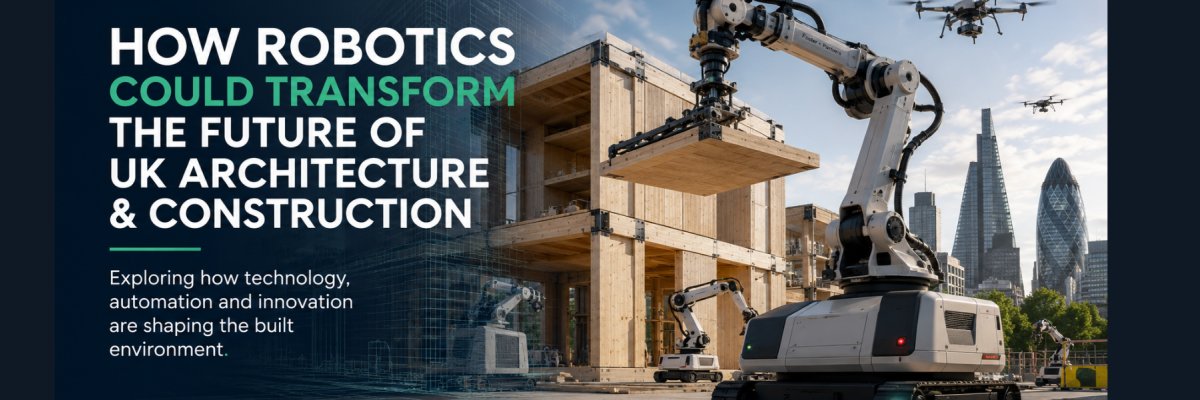
Foster + Partners has joined a UK-EU consortium that has secured a €4 million (£3.4 million) research grant to investigate autonomous robotic construction. The three-year research project, known as SWIFT-BUILD, will explore how robotic systems, artificial intelligence and modular timber construction could work together to change the way buildings are assembled.
For an industry that has traditionally relied heavily on manual processes and skilled workers on site, the implications could be significant.
What is SWIFT-BUILD?
SWIFT-BUILD stands for Swarm-based Inverted Fabrication for Timber Buildings.
The concept uses multiple autonomous robots to construct modular timber buildings differently from conventional construction.
Rather than building upwards in the traditional sequence, the system is designed around an inverted construction process. Components can be assembled at ground level before being lifted into position, with robotic systems working together to construct the structure. Drones and AI-supported technology can also be used to monitor the process and identify potential issues.
The research is expected to culminate in a full-scale physical demonstration, where an autonomous robotic swarm will construct a timber pavilion.
This isn't simply about replacing people with machines. The project is investigating whether robotics can create a safer, more flexible and potentially more sustainable approach to construction.
Why timber?
Timber is an important part of the project because of the growing focus on sustainable construction and the circular economy.
The proposed system uses modular timber components that can be assembled, dismantled and potentially reused. Rather than treating a building as a permanent structure that eventually becomes waste, the approach aims to make components easier to recover and reuse.
That could become increasingly important as the built environment faces growing pressure to reduce its environmental impact.
For Architects, this presents an interesting opportunity. Sustainability is no longer simply about specifying greener materials or improving energy efficiency. It is increasingly influencing how buildings are designed, assembled, adapted and eventually taken apart.
Could robots change the construction site?
The construction industry has historically been slower to adopt automation than many other sectors.
Construction projects are highly variable, sites constantly change and buildings are often constructed in different locations and environments. These factors make automation considerably more challenging than introducing robots into a controlled manufacturing environment.
Projects such as SWIFT-BUILD suggest that this could be beginning to change.
If autonomous systems become capable of carrying out increasingly complex construction tasks, we could see robots assisting with everything from assembly and lifting to site monitoring, surveying and quality control.
That doesn't necessarily mean a future where construction sites are completely operated by machines. Instead, the role of people could evolve.
Workers may increasingly be responsible for programming, supervising, coordinating and maintaining robotic systems, while technology handles certain repetitive, physically demanding or hazardous tasks.
What does this mean for Architects?
For Architects, the impact could begin much earlier than the construction phase.
If buildings are being designed specifically for automated assembly, Architects will need to consider how their designs interact with robotic manufacturing and construction systems.
This could mean greater collaboration between:
- Architects
- Architectural Technologists
- Structural Engineers
- BIM Managers
- Computational Designers
- Digital Construction Specialists
- Robotics Engineers
- Project Managers
- Construction Professionals
The traditional boundaries between architecture, engineering and construction could therefore become increasingly blurred.
Design teams may need to understand not only what a building should look like, but also how it can be digitally manufactured, assembled and eventually disassembled.
Technology could create new recruitment opportunities
For the recruitment industry, developments such as SWIFT-BUILD are particularly interesting because they demonstrate how quickly the skills required across the built environment are evolving.
Architecture practices will still need talented Architects and Designers, but technical and digital expertise is becoming increasingly valuable.
Skills in BIM, computational design, digital fabrication, automation, AI and data management could become increasingly important as practices adopt new technologies.
At the same time, traditional construction expertise isn't going away.
Someone still needs to understand materials, structural principles, regulations, project delivery and how buildings actually work in the real world.
The future is therefore unlikely to be about technology versus people.
Instead, it could be about people who understand how to use technology effectively.
Will robots replace Architects?
Probably not.
Architecture is about considerably more than producing drawings or assembling materials.
It involves creativity, problem-solving, communication, understanding clients and communities, navigating regulations and making decisions where there isn't necessarily one correct answer.
Robotics may change how buildings are constructed, but that doesn't remove the need for human creativity and professional judgement.
Instead, technology could remove some of the more repetitive aspects of the industry, allowing professionals to focus more heavily on design, innovation, problem-solving and project delivery.
The bigger question may therefore be: Which skills will Architects and construction professionals need alongside technology?
The architecture workforce is changing
The rise of robotics is just one part of a much wider transformation taking place across the built environment.
AI is already influencing design workflows. BIM has become essential to many projects. Digital twins are becoming increasingly sophisticated, while advances in off-site manufacturing and modular construction are changing how buildings can be delivered.
For employers, this creates a challenge.
Finding candidates who combine traditional industry knowledge with modern technical skills could become increasingly important.
For candidates, it presents an opportunity.
Developing skills in emerging technologies could help professionals differentiate themselves as architecture and construction practices continue to evolve.
What does the future look like for British Architecture?
The idea of a construction site populated by autonomous robots may still sound futuristic.
However, projects such as SWIFT-BUILD demonstrate that the industry is already investigating how robotics can move beyond the factory and onto the building site.
The technology still has challenges to overcome, and widespread adoption will not happen overnight.
But the direction of travel is clear.
Architecture and construction are becoming increasingly digital, automated and interconnected.
For practices and professionals, the biggest opportunity may not be to compete with technology, but to understand it.
The architects and construction professionals of the future could be those who combine creativity, technical expertise and an ability to work alongside emerging technologies.
And for the recruitment sector, that means one thing: the definition of the "ideal candidate" is changing.
At Bennett & Game, we understand the importance of finding professionals with the right combination of technical expertise, industry experience and future-focused skills as the built environment continues to evolve.
If you’re looking for your next team member in architecture and construction, or looking for your next job, get in touch with our team of specialist recruiters today!
Sources


