

New Prime Minister, Tax Changes & Interest Rates: What It Means for the UK Economy in 2026
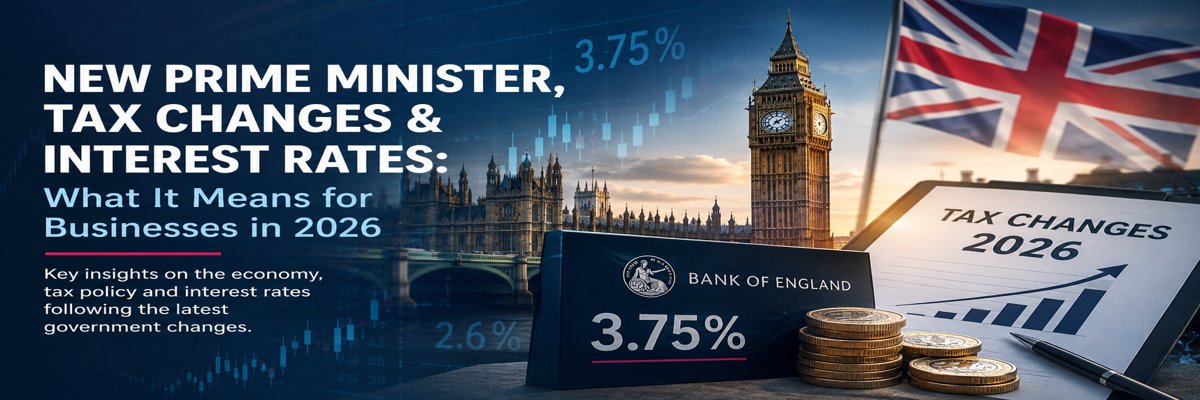
The arrival of a new Prime Minister, Andy Burnham, has brought renewed focus to the UK economy and the direction it’s headed. Alongside early tax changes and ongoing decisions from the Bank of England, businesses and individuals alike are trying to understand what this means for growth, hiring, and financial stability.
In a climate shaped by inflation pressures, global uncertainty, and cost-of-living concerns, the relationship between government policy and interest rates has never been more important.
A New Leadership, Same Economic Challenges
While a new Prime Minister often signals change, the reality is that the UK economy continues to face familiar pressures.
Rising energy prices, global instability, and inflation remain key concerns. Analysts suggest that regardless of leadership, the government faces “very difficult trade-offs” when balancing public spending, taxation, and economic growth.
Despite ambitions for reform, fiscal policy is constrained by:
- High public spending demands
- Pressure to avoid excessive borrowing
- The need to maintain market confidence
This means that while political direction may shift, economic limitations still shape decision-making.
Recent Tax Changes: Relief vs Revenue
The new government has already introduced and proposed a mix of tax measures aimed at easing pressure on households while maintaining public finances.
Key developments include:
- Targeted relief measures such as reduced energy-related costs and selective business rate support
- Increases to certain taxes introduced from 2026, including dividend tax rising by 2 percentage points
- Planned increases to savings income tax rates from 2027 across all bands
This reflects a balancing act:
- Short-term relief to support households and businesses
- Long-term tax increases to stabilise government finances
Economists widely expect further clarity in the Autumn Budget, where broader fiscal strategy will be outlined.
Interest Rates: Holding Steady (For Now)
At the same time, the Bank of England has taken a cautious approach to monetary policy.
- The base interest rate is currently held at 3.75%
- Inflation has fallen to around 2.6%, but remains above the 2% target
- Policymakers are divided, with some pushing for further increases due to ongoing inflation risks
The decision to hold rates reflects uncertainty in the wider economy, particularly:
- Rising global energy prices
- Geopolitical tensions
- Concerns about future inflation spikes
While rates have fallen from their 2024 peak of 5.25%, the expectation is that any further cuts will be gradual - and not guaranteed.
The Link Between Tax Policy and Interest Rates
One of the most important dynamics in today’s economy is how fiscal policy (tax and spending) interacts with monetary policy (interest rates).
- Tax cuts or increased spending can stimulate the economy, but may push inflation higher
- Higher inflation may force the Bank of England to raise or maintain higher interest rates
- Higher interest rates increase borrowing costs and can slow growth
This creates a delicate balancing act between government and central bank decisions.
For example, while tax relief measures may ease cost-of-living pressures in the short term, economists are already questioning whether they could add to inflationary pressures in the long run
What This Means for Businesses
For UK businesses, the current environment requires careful planning.
Challenges:
- Continued higher borrowing costs
- Uncertainty around future tax policy
- Fluctuating consumer demand
Opportunities:
- Stability in interest rates (for now)
- Targeted government support in key sectors
- Potential for increased investment if inflation continues to ease
Sectors such as construction, engineering, and property - where financing plays a critical role - will feel these effects most directly.
Impact on Hiring & the Job Market
Economic uncertainty often feeds directly into hiring trends.
- Businesses may take a cautious approach to recruitment
- Permanent hiring may slow, with greater reliance on contract roles
- Candidates may prioritise job security over career moves
At the same time, skills shortages haven’t disappeared, meaning companies still need to act quickly when the right talent becomes available.
What does our CEO Ryan have to say about the current market?
“Policy changes. Rates go up and down. Budgets get revised. What doesn't change is that businesses win or lose on the strength of their people.
That's why a recruitment partner who knows your business, not just your job spec matters more in periods like this. We don't just fill vacancies, we help build teams that can handle whatever's next.”
Looking Ahead
The UK economy in 2026 sits at a crossroads.
With a new Prime Minister setting the tone, tax policies evolving, and interest rates holding steady, the direction of travel will depend on how effectively these elements are aligned.
Key things to watch:
- The upcoming Autumn Budget and wider tax strategy
- Future Bank of England rate decisions
- Inflation trends through late 2026 and into 2027
Final Thoughts
The combination of political change, tax adjustments, and interest rate decisions highlights one key theme: uncertainty remains, but so does opportunity.
For businesses, success will depend on staying agile, planning, and adapting quickly to economic signals. For individuals, understanding how these changes impact finances, job security, and long-term planning is more important than ever.
In a shifting economic landscape, those who stay informed and act decisively will be best positioned to succeed.
If you are looking for a new job in the UK or looking to hire your next staff member, get in touch with our team of recruitment experts to discuss your requirements.